Stripe
The most widely used provider for online stores, with fast onboarding, payouts in EUR and other currencies, and ready-made WooCommerce and Magento modules.
Payment integrations · Updated 28 October 2026
We connect your store to a payment provider so customers can pay by Visa, Mastercard, Apple Pay, Google Pay and local methods directly on your site. We build the module for WooCommerce or Magento, sort out checkout and everything the provider requires on the site, then test before go-live.
You sign the merchant agreement with the provider. We take care of everything else, from the module to the site review, so you don't have to discuss technical details with them.
Bank or payment provider
Ecommerce Solutions
Across the EU, online card payments are offered by banks and by payment service providers. We work with all the major ones, so you choose a provider on its terms, not on what your site supports.
The most widely used provider for online stores, with fast onboarding, payouts in EUR and other currencies, and ready-made WooCommerce and Magento modules.
One platform for cards, wallets and local methods across Europe, with saved cards for repeat purchases and payment links. Suited to larger merchants.
Popular in the Benelux, Germany and France, with simple pricing and strong local methods such as iDEAL, Bancontact and SEPA. Integration via API or module.
PayPal checkout plus cards, Apple Pay and Google Pay through Braintree, with plugins for WooCommerce and Magento 2.
One of Europe's largest acquirers, used by many banks, with payment links and recurring payments.
Buy now, pay later and instalments across most EU markets, for stores that want higher basket values.
Terms, fees and availability change. When you send us an enquiry, we'll tell you which providers currently suit your type of sales, markets and volume.
Providers won't activate card payments until the site has all required details and pages. This is the most common reason activation is delayed, so we sort them out straight away, in parallel with the integration.
Provider approval takes longest, so we start with the application and prepare the site while it's processed. If we're also building a new store, everything runs in parallel with ecommerce development.
Based on your products, volume, markets and the payment methods you want, we help you choose a provider.
You apply to the provider, and we prepare the technical site details they ask for.
Required pages, logos, prices with VAT and HTTPS, so the site passes review first time.
The module in the provider's test environment and test purchases: successful, declined, cancelled and refunded.
Switching to live credentials, the first real payment and checking that payouts reach your account.
Besides cards, customers can pay with the methods they use at home: iDEAL in the Netherlands, Bancontact in Belgium, BLIK in Poland, or SEPA bank transfers. On mobile the site hands off straight to the banking app, and fees are usually lower than for cards.
Pay-later and instalments are handled by our buy now, pay later integration, and for customers outside the eurozone we add PayPal or multi-currency processing with Stripe or Adyen.
The digital transformation of retail has permanently changed how we buy, sell and do business. One of the key factors in ecommerce success is the ability to take card payments. Whether you're a small craft maker, a mid-sized clothing business or a large retailer with hundreds of products, secure and reliable online payment is now a standard, not a luxury.
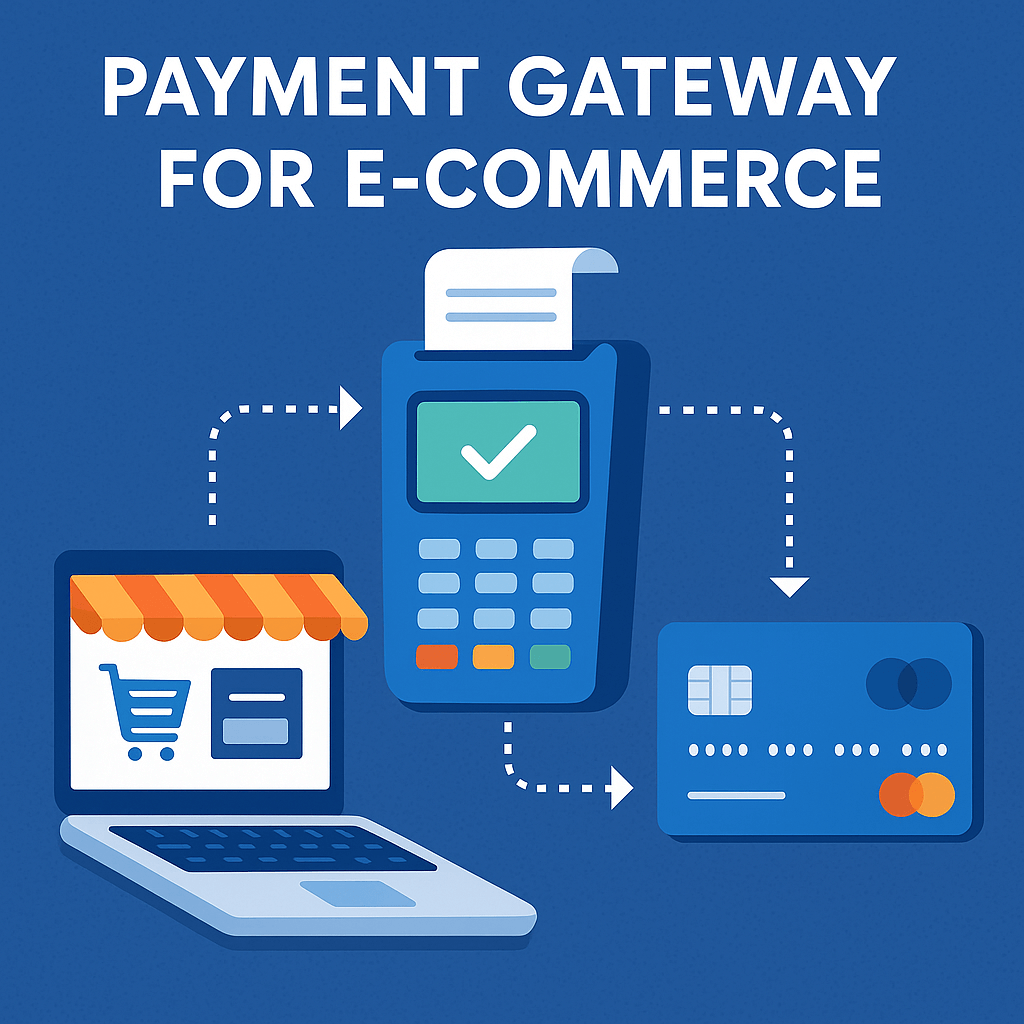
In this guide we explain in detail how to implement a payment gateway for your online store in Europe, which providers offer it, what the technical and legal requirements are, the benefits for you and your customers, and how to choose the best option.
A payment gateway is technology that lets online merchants accept electronic payments by cards such as Visa, Mastercard, Maestro or American Express. It acts as a bridge between your store, the customer's bank and your acquirer, enabling secure exchange of transaction data.
The main functions of a payment gateway include:
Without a payment gateway, no online store can accept card payments.
Online payment is much more than a convenience – it brings benefits for both seller and customer:
Across the EU, the number of people paying online keeps growing, especially since the pandemic, when contactless and digital payments became dominant.
There are several options for a payment gateway in Europe. You can work with acquiring banks, international payment processors or specialised fintech companies. Here are some of the most widely used:
Large European acquirers and many banks offer online card acceptance. A few examples:
One of the largest acquirers in Europe. It offers:
Nexi (including Nets and Concardis) connects your store through its own gateway. Advantages include:
Many European banks offer card acceptance directly. Implementation is straightforward and all major cards are supported.
They also offer ecommerce acceptance, often outsourced to a processor such as Worldline or Adyen.
Besides banks, fintech companies offer integration, often with faster onboarding and more flexible pricing:
Very widely used across Europe, with fast onboarding and one platform for many markets and currencies.
A single platform for cards, wallets and local payment methods in every EU market, popular with larger merchants.
Popular in the Netherlands, Belgium, Germany and France, with transparent pricing and strong support for iDEAL, Bancontact and SEPA.
Although not a classic payment gateway, many stores offer PayPal as an alternative, especially for international customers.
Connecting a store to a payment gateway looks like this:
Depending on the platform your store is built on, integration can be easier or more demanding.
Several plugins enable integration with European providers:
Magento needs a more complex integration but offers a high degree of flexibility. You can use official modules for each provider or build a custom gateway.
Shopify Payments is available in most EU countries, and third-party providers can be connected too.
For a custom-built store, integration is done via the API – PHP, cURL, JSON payloads, etc. Knowledge of security protocols (SSL, hashing, anti-fraud mechanisms) is essential.
The cost of a payment gateway varies by provider and pricing model. Typical items include:
Some providers offer better terms to higher-volume merchants, while fintech solutions offer more flexible pricing.
To accept card payments in the EU you need to:
When choosing a solution, consider:
If you target one national market, a provider with strong local methods (such as Mollie in the Netherlands) is ideal. For cross-border sales, Stripe, Adyen and similar systems may be a better choice.
Implementing a payment gateway is a key step in building a successful ecommerce business. Although it can look complicated at first, today's technology, provider support and available tools make the path to online payments much easier.
With the right partner, a well-implemented solution and an optimised user experience, your online sales can grow significantly. Customers want security, speed and simplicity – and a good payment gateway delivers exactly that.
Remember: a payment gateway isn't just a technical tool – it's a business decision that builds trust and drives growth.
For detailed steps for WooCommerce and Magento 2 and how to reduce fees, read our guide accepting card payments online.
Can't find your answer? Write to us and we'll reply within one business day.
A registered business, a merchant agreement with a payment provider, the provider's module on your store, and a site with all required information: company details, prices with VAT, terms of sale, returns, a privacy policy and card logos.
It depends mostly on the provider: from a few days with fintech providers to several weeks with banks. We prepare the site and integration while the application is processed, so payments can go live as soon as it's approved.
For EU consumer cards, fees are typically between 1.2% and 3% per transaction plus a small fixed fee, and some providers charge a monthly fee. Exact terms depend on volume, card mix and product type.
It depends on your markets. Stripe and Adyen cover the whole EU with one integration; Mollie is strong in the Benelux, Germany and France. We recommend a provider based on where your customers are and which methods they use.
Yes. Stripe, Adyen, Mollie and Braintree all support them. We check this when choosing a provider.
Payment methods customers use in their own country, such as iDEAL, Bancontact, BLIK or SEPA transfers. They sit in checkout next to cards and often convert better in those markets.
Yes. We connect providers to existing WooCommerce and Magento stores, and for other platforms we first check whether a module or API exists.
Yes. We connect the store to your invoicing or accounting system, so the customer automatically receives a VAT invoice after payment.
Tell us which platform your store runs on and whether you already have a payment provider. Within one business day we'll tell you what's needed and how long it takes.